MT4 · MT5 · TradingView

The market leaves its levels behind.
These indicators find them.

Review the market in full. MERAVITH shows you what is happening right now. It analyzes volume and price across every timeframe — from the lowest to the highest. It shows where financial interest is concentrated, where there is buying and where there is selling. This gives you market context — something ordinary indicators cannot provide.

  • Discover where price finds support
  • See where the indicator detects resistance
  • Check where trading volume runs out

Bought once, yours for good — or rented by the month. Written and supported by one developer, who answers.

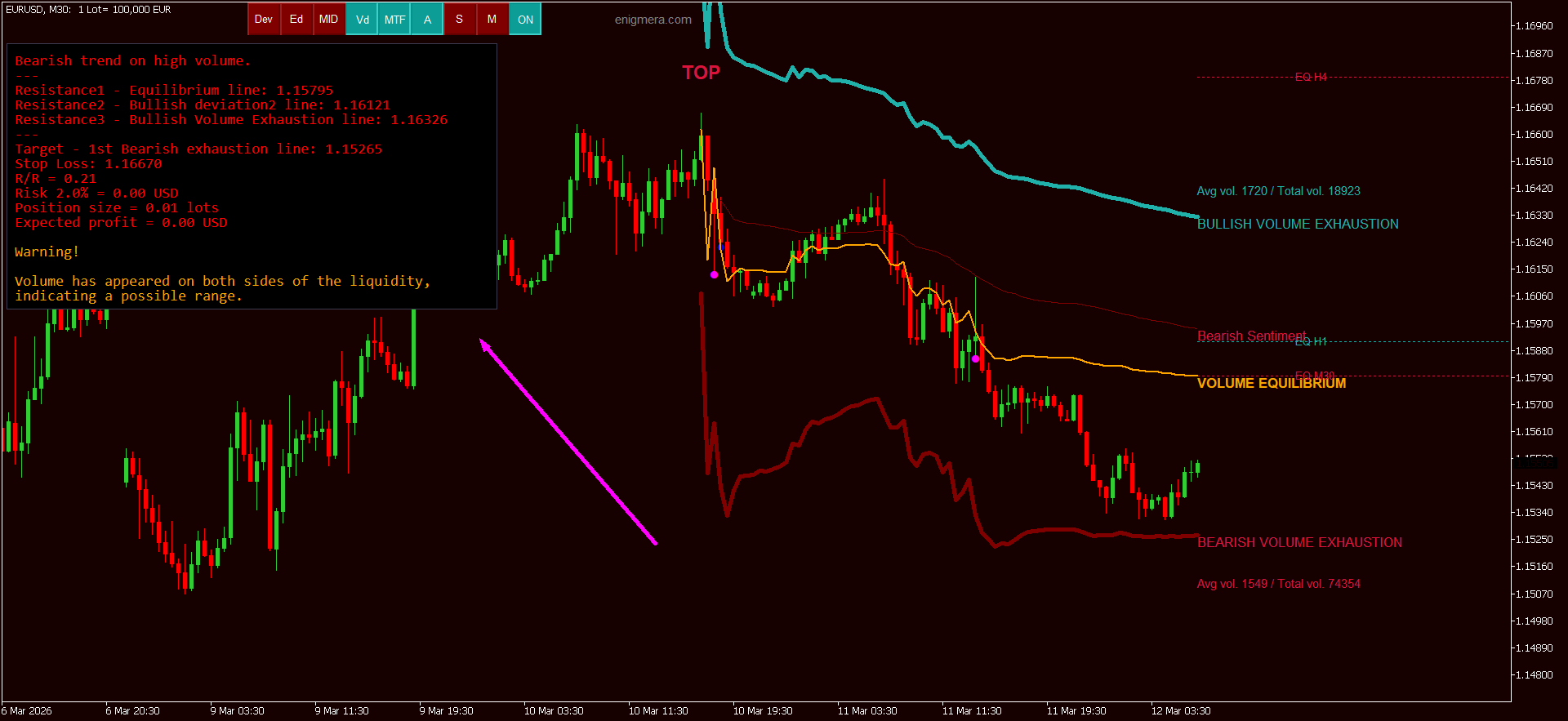
MERAVITH on EURUSD M30: the volume equilibrium line, both volume exhaustion levels, and the panel reading out resistances, target, stop loss and position size
MERAVITH on EURUSD M30 — and its own reading of what is on the chart
★★★★★

“By far, one of the best indicators I've ever bought. It's extremely accurate, and the support and attention from the creator are the best I've seen around here.”

Gabriel De Araujo Lobo · April 2026 · MQL5
★★★★★

“There is nothing else that can match this trading system. Finally something that makes sense and actually works. Ivan is kind and very helpful, he answers questions and gives good guidance.”

adrian100379 · July 2026 · MQL5
★★★★★

“The best system on the market. I recommend it with pleasure. He is happy to help you and works on improvements every day.”

Valeriu-alexandru Petrache · March 2026 · MQL5

Cuique pugnae sua instrumenta sunt

Today's Market Snapshot - 12 November 2026
Fresh market intelligence and trading notes, surfaced first.

Quando gli indicatori funzionano e quando no: la verità brutale che la maggior parte dei trader rifiuta di accettare

Nel trading c'è una bugia enorme che continua a essere ripetuta: che gli indicatori ti mostreranno la direzione, ti daranno segnali e ti renderanno profittevole. Qui possiamo aggiungerci anche gli expert advisor. La gente li appiccica sul grafico come icone sacre, ci prega davanti, aspetta che «dicano qualcosa» e poi si chiede perché continua a perdere. La verità è semplice, ma fa male: gli indicatori da soli non funzionano. Non pensano, non analizzano, non capiscono il mercato. Non sono altro che formule matematiche che misurano il passato. E se tu non capisci il mercato, l'indicatore non ti salverà. Ti distruggerà.
L'errore più grande dei principianti è usare gli indicatori senza contesto. Piazzano RSI, MACD, qualche «super indicatore», e aspettano il miracolo. È come fissare uno specchio aspettandosi che ti mostri il futuro. Un indicatore mostra solo le ultime candele. Se le ultime candele sono caos — l'indicatore è caos. Se non hanno direzione — l'indicatore non ha direzione. E quando il trader vede l'indicatore che «punta in alto» mentre il prezzo scende, comincia a dare la colpa all'indicatore, al mercato, al mondo intero. Ma la verità è che dà la colpa a tutti tranne che a se stesso. Perché non ha capito la cosa più elementare: un indicatore non è un cervello. È una calcolatrice.
Ancora peggio è quando qualcuno sostiene che un indicatore funziona solo su una coppia o su un solo timeframe. Questa è pura truffa. Se la logica è buona, funziona ovunque. Se funziona solo sull'oro o solo su M5, quella non è logica — è un giocattolo tarato per fare bella figura in un posto e bruciarti il conto in tutti gli altri. Al mercato non importa nulla dei tuoi indicatori. Si muove in base a struttura, impulso, liquidità. Se l'indicatore non sa leggerli, è inutile.
Eppure ci sono momenti in cui gli indicatori funzionano benissimo. Ma questo succede solo quando il trader ha un contesto — un contesto reale, logico, coerente. Quando sai cosa sta succedendo sul mercato, quando capisci la struttura, quando vedi la direzione, allora l'indicatore diventa uno strumento. Non un padrone, ma un assistente. Se la tua analisi dice che il mercato è rialzista, l'indicatore può aiutarti a trovare il momento giusto per entrare. Ma se l'indicatore ti dà un segnale ribassista, non lo seguirai, perché il tuo contesto ti dice altro. È questa la differenza tra un trader che ragiona e un trader che fissa le frecce.
Gli indicatori funzionano solo quando lavori bene *tu*. Quando pensi, quando analizzi, quando capisci il mercato. Se aspetti che sia l'indicatore a dirti cosa fare, hai già perso. Non sono gli indicatori a fare soldi. È l'analisi a fare soldi. È il contesto a fare soldi. È la logica a fare soldi. L'indicatore è solo uno strumento — e se lo usi come strategia, ti distruggerà.
Ed è esattamente qui che emerge la vera differenza tra gli indicatori che disegnano semplicemente delle linee e quelli che forniscono un contesto reale. Meravith è l'unico indicatore che costruisce automaticamente un contesto reale in tempo reale, attraverso la sua analisi multi-timeframe. Non aspetta che sia tu a decidere cosa guardare — analizza il mercato da solo, raccoglie la struttura da tutti i timeframe e te la presenta come un quadro chiaro. Questo non è soltanto un indicatore. È un cervello che lavora per te. Anche Transaction Speed fornisce contesto, per il modo in cui misura l'impulso e la velocità del movimento, ma Meravith resta l'unico a farlo in modo completamente automatico e senza il tuo intervento.
Dall'altra parte ci sono gli indicatori manuali come Naturu e Speculator. Anche loro forniscono contesto, ma quel contesto dipende interamente dalla persona che li configura. Lo strumento non analizza da solo — è il trader ad analizzare attraverso lo strumento. E se il trader sa quello che fa, questi strumenti manuali possono essere incredibilmente potenti. Ma se non lo sa — sono solo un'altra linea colorata sul grafico.
La verità è dura ma semplice: il contesto automatico — reale, coerente, multi-timeframe — arriva solo da Meravith. Tutto il resto è lavoro manuale oppure illusione. E un trader che non capisce il contesto non ha alcuna possibilità. Il mercato non perdona chi fissa le frecce. Il mercato premia solo chi ragiona.
https://www.enigmera.com/indicators.html?indicator=meravith-scanner
Share post:
Facebook X LinkedIn Telegram WhatsApp
Markets today MERAVITH · D1
Today's trading example EURCAD
One EURCAD trade, from the scan to the exit
The scan, the exhausted cluster, the entry with Alt and the exit at the higher resistances.
Watch on YouTube

MERAVITH on the daily chart, last closed day: 05.11.2026 · Not investment advice.

Journal

Trading Far from Fair Value vs. Trend Trading

There are two main ways to trade the market. The first follows the trend and relies on the move continuing. The second trades the return of price to its fair value and relies on the move having gone too far. This article explains why tradin…
Read full post

Need a target? Think about this!

The Target Question: A Matter of Logic Logic first The most important thing in trading is logic. When we apply logic, we achieve results. This article asks one logical question to every reader. There is no ready answer here. Each reader is …
Read full post

Context Is King

How Trading Indicators Really Work Trading indicators do not predict the market. They interpret market data through the algorithms built into them. An indicator does not truly know whether the market is bullish or bearish. It simply display…
Read full post
Page 1 of 3
Analysis
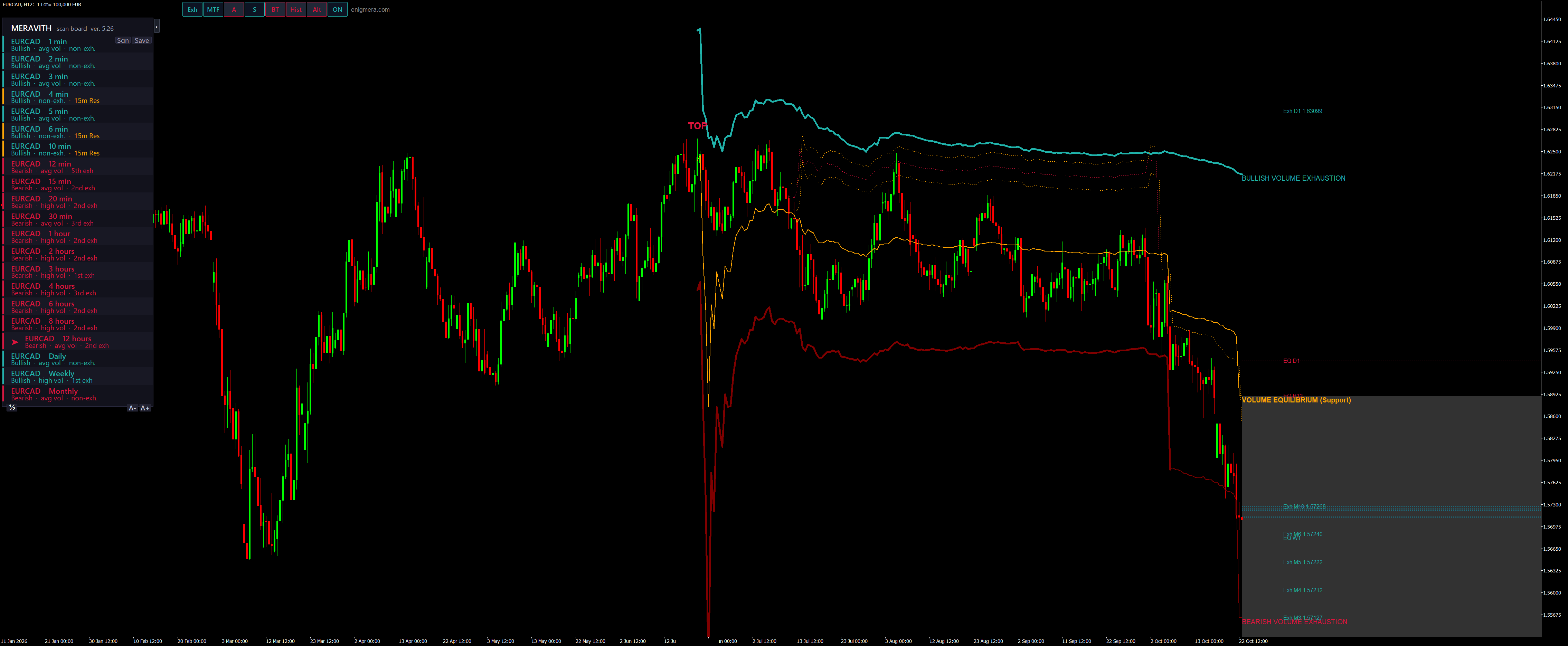
EUR/CAD: a buy after an exhausted bearish Swarm

EUR/CAD: a buy after an exhausted bearish Swarm NEW

1. What the scan shows After a MERAVITH scan, EURCAD shows a run of timeframes from M12 to H12 that are all bearish, and every one of these bearish trends is already exhausted. We call such a group a Swarm: neighbouring timeframes that move in the same direction and have all reac…
Read analysis
What I traded today

What I traded today

One EURCAD trade, from the scan to the exit This is a real trade, read step by step with MERAVITH. 1. The scan. We started by scanning EURCAD on every timeframe, from one minute to one month. One thing stood out at once: from M30 up to H12, eight timeframes in a row were bearish.…
Read analysis
Page 1 of 7
Post Chat Public conversation between users
Loading chat...
Be respectful and stay on topic.