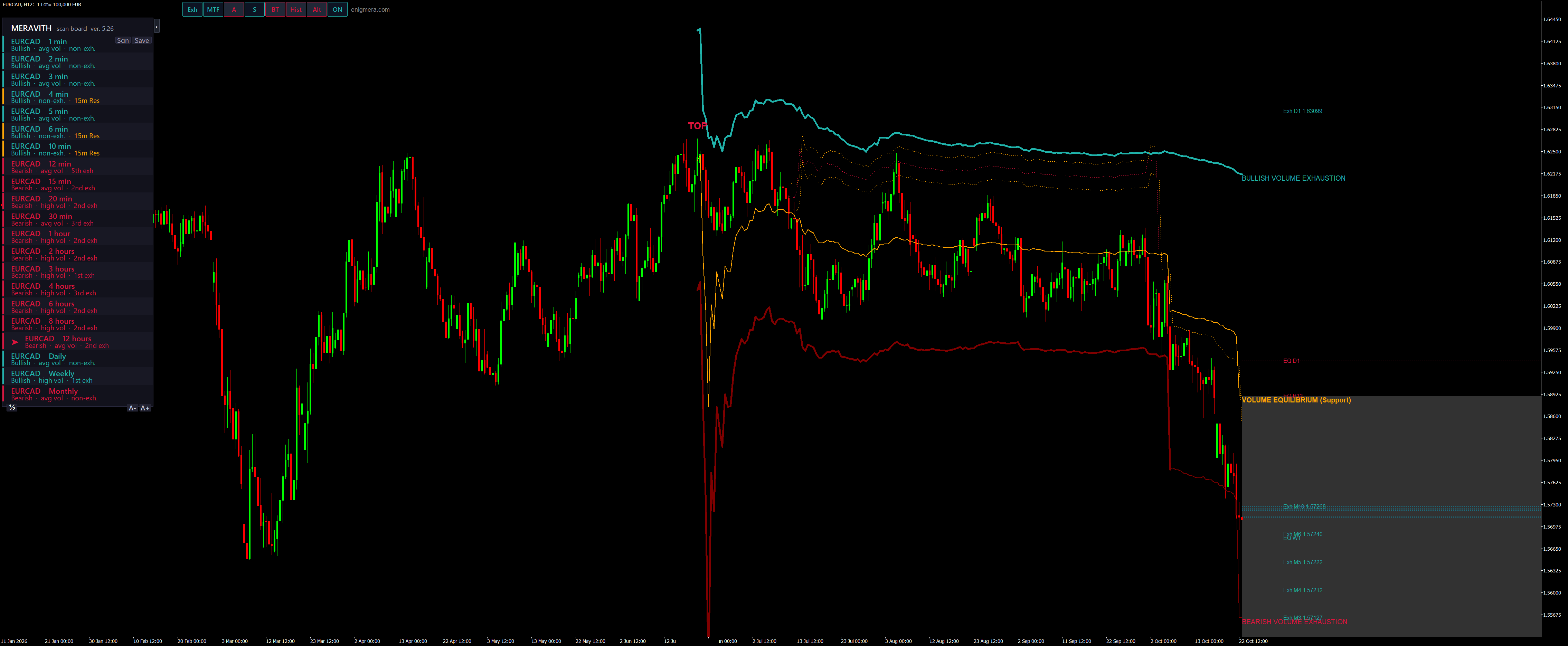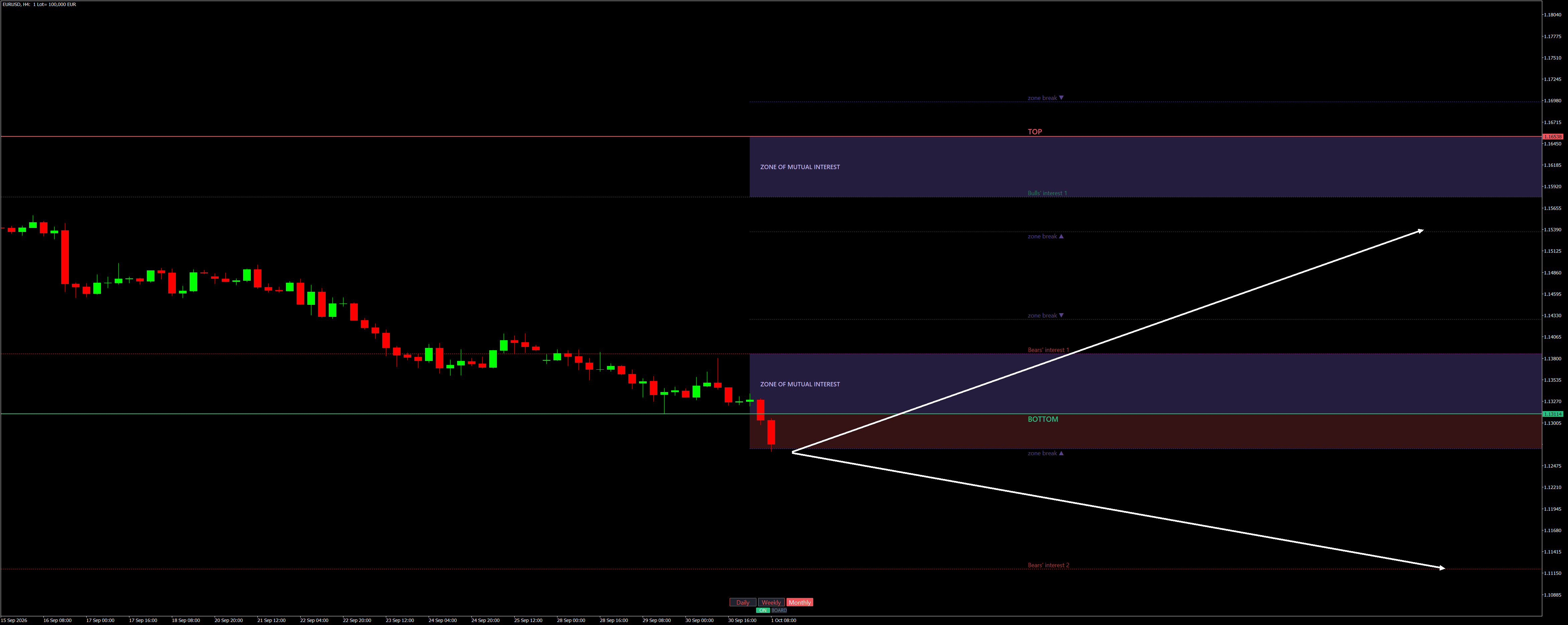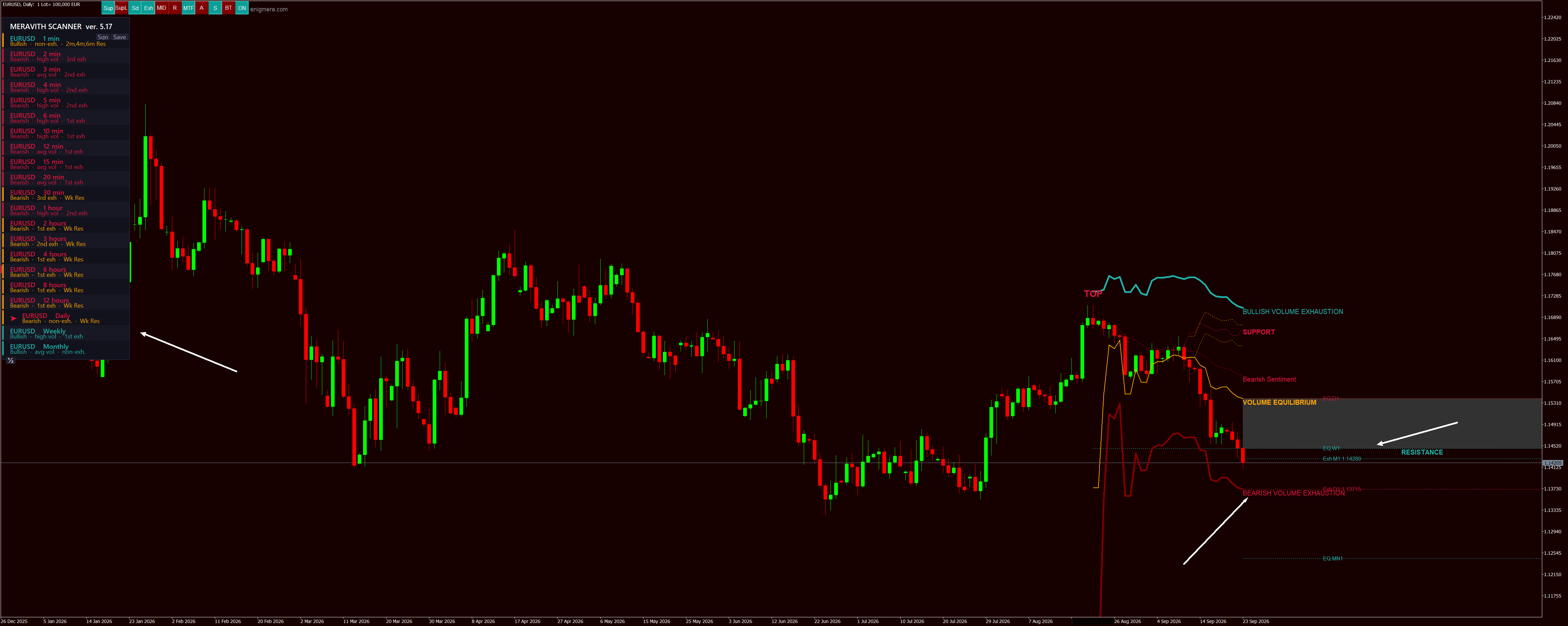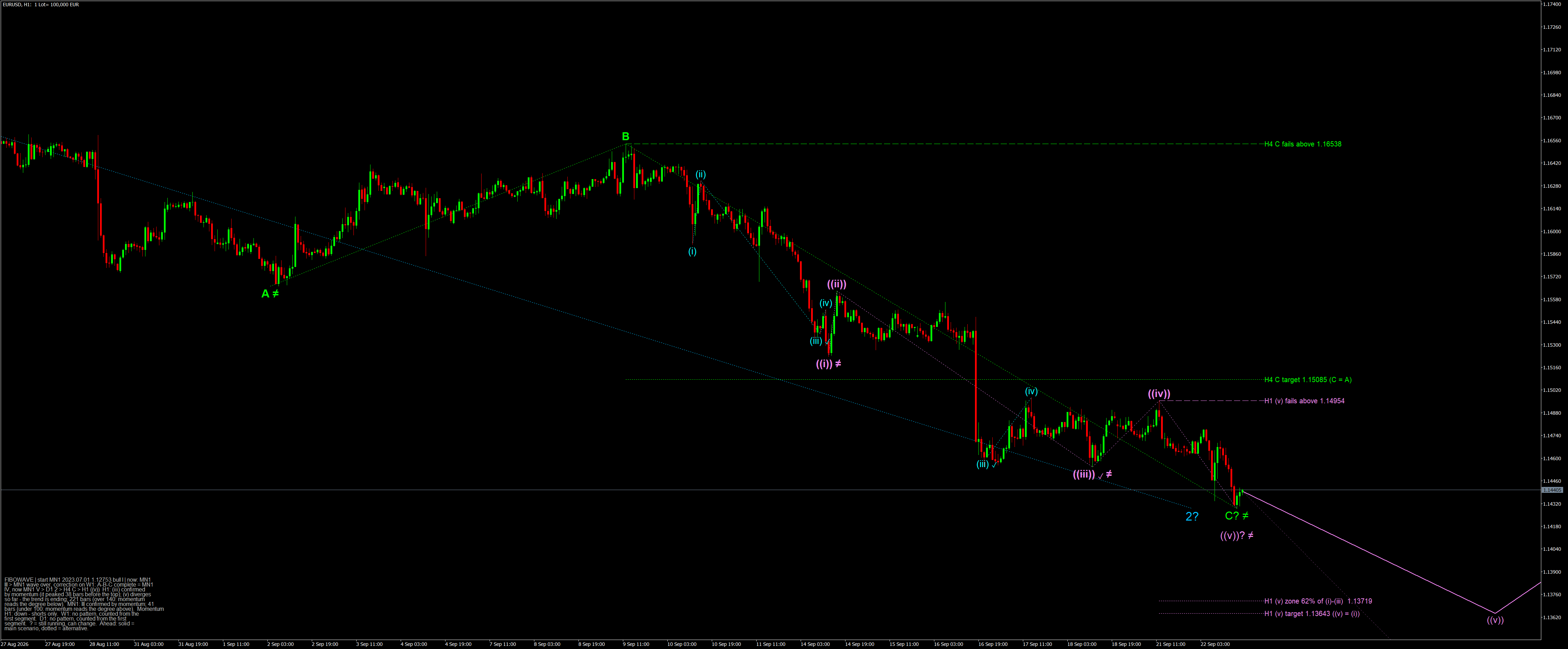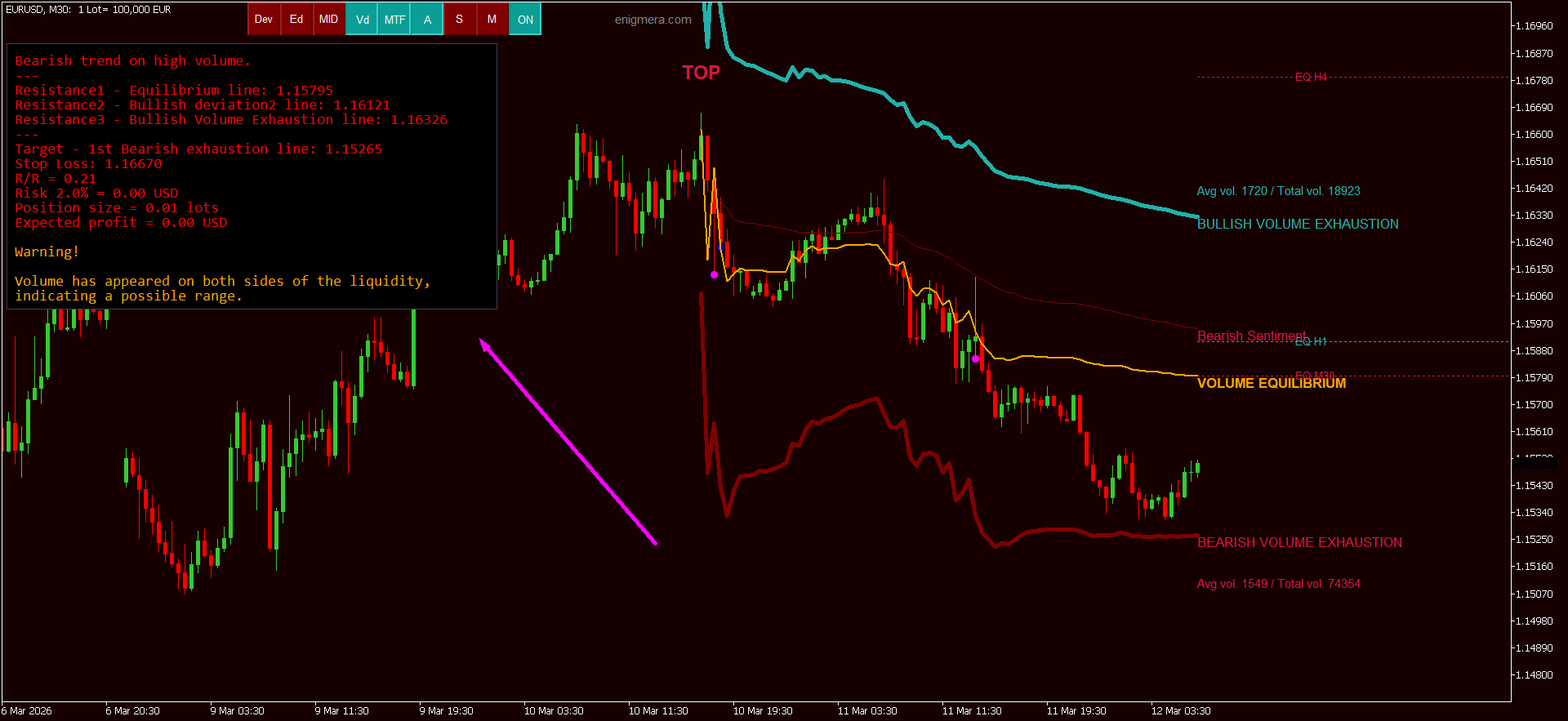
This article explains why trading from the point of maximum deviation from fair value gives a clearer logic for entry, target and risk control. The comparison does not reject the trend. It shows where each approach has an advantage and where it has a weakness.
What Fair Value Is
Fair value is the level to which the market returns after every strong move. It is the price at which buyers and sellers are in balance.
When price moves too far from this level, the move becomes exhausted. New participants stop entering in the same direction. Those who are already in a position start taking their profit. This creates pressure in the opposite direction.
Fair value and exhaustion must be defined with clear, mathematically described rules. A concept that is used without a precise algorithm gives different answers in different situations and leads to losses.
Trend Trading
Trend trading enters in the direction of the move after it has already started. The logic is simple: the trend continues until it stops.
The weaknesses of this approach are the following:
• Late entry. The trend is confirmed only when a significant part of the move has already passed.
• Undefined target. No one knows how far the trend will continue. Different price target algorithms give different answers.
• Growing risk. The further the trend has gone, the greater the risk that it stops exactly at the moment of entry.
• False signals. At the start of a trend, frequent false signals lead to a series of small losses.
The trend also has an advantage. When it is strong and long, the profit from one position can be large. This is why trend trading relies on a small number of large winning trades.
Trading from Maximum Deviation
Here the trader does not chase the move. He waits for the market to reach the point where it has gone too far from its fair value, and trades the return.
This approach does not contradict the trend. The market is always in a trend, but every trend has a point of exhaustion. This is exactly the point that is traded.
The advantages are the following:
1. Clear reference point. Fair value defines the direction and the target of the trade.
2. Defined target. The target is not "as much as the market gives", but a return to a specific level.
3. Entry against an exhausted move. The entry is at the moment when trend participants are finishing, not when they are entering.
4. Higher percentage of winning trades. By its nature, the approach gives more frequent winning trades with clearly defined targets.
5. The approach of the banks. Banks calculate how far a market is stretched in one direction and profit from its return to fair value.
Comparison
• Entry. Trend trading enters after the move has started. Trading from maximum deviation enters when the move is exhausted.
• Target. In trend trading, the target is undefined. In trading from maximum deviation, the target is the return to fair value.
• Percentage of winning trades. Lower in trend trading. Higher in trading from maximum deviation.
• Profit per trade. In trend trading, it is large in a strong and long trend. In trading from maximum deviation, it is defined by the distance to the target.
• Main risk. In trend trading, it is a trend reversal after entry. In trading from maximum deviation, it is a fundamental event that shifts fair value.
• Requirement for the trader. Trend trading requires patience during a series of small losses. Trading from maximum deviation requires discipline when entering against the move.
Risks and the Trader's Responsibility
Fair value is not constant. Fundamental events shift it: central bank meetings, interest rate increases or decreases, wars. In this case, the deviation is not exhaustion, but the start of a new trend.
Example: in the MERAVITH EA tests for 2025, multiple interest rate changes for many currencies led to 3–4 positions against the new trend. They ate almost all of the profit for the year.
There is no algorithm that can take this into account. The responsibility remains with the trader. He must monitor fundamental events and define the risk of each trade in advance, before entry.
Practical Application: Swarm and ENIGMERA Terminal
Full exhaustion on all timeframes in one direction is rare: 1 to 3 times a year per instrument. But it reliably marks a reversal.
To trade more often, the MetaTrader timeframes are split into groups. A Swarm is a sequence of at least 5 consecutive timeframes that are in one direction and are exhausted. For example, bullish trends on the 5, 6, 10, 12, 15, 20, 30-minute and 1-hour timeframes. The more timeframes it includes, the bigger the Swarm and the more interesting it is for trading. The edge groups around M1 and MN are not traded, because there is no data below and above them for comparison.
The trading rule is the following: the entry is after the 38% level is crossed, and the profit is taken around the 50% level.
A Swarm does not last long, so speed is decisive. ENIGMERA Terminal performs the scanning on the enigmera.com server, and MetaTrader 5 only displays the result. 28 currency pairs are scanned in about 10–12 seconds, instead of about 10 minutes with the standard MERAVITH Scanner. In the Swarms submenu, the most interesting Swarms are at the top of the table.
ENIGMERA Terminal is for analysis only. For automatic trading, there is MERAVITH EA.
Conclusion
Trend trading chases a move whose end it does not know. Trading from maximum deviation waits for the move to exhaust itself and trades the return to a clearly defined level. This gives a defined entry, a defined target and a higher percentage of winning trades.
The price for this is discipline: monitoring fundamental events and accepting the responsibility that no algorithm takes on instead of the trader.
ENIGMERA Terminal can be downloaded as a trial and explored for several days at www.enigmera.com.